 Pin it
 The smell of slow-cooking ribs has this way of taking over the entire house, drifting through every room until everyone is hovering around the oven door. My dad used to make ribs on summer Sundays, and the anticipation was almost unbearable. Now I understand why he took his time. There is something magical about meat that has been cooked low and slow until it practically surrenders.
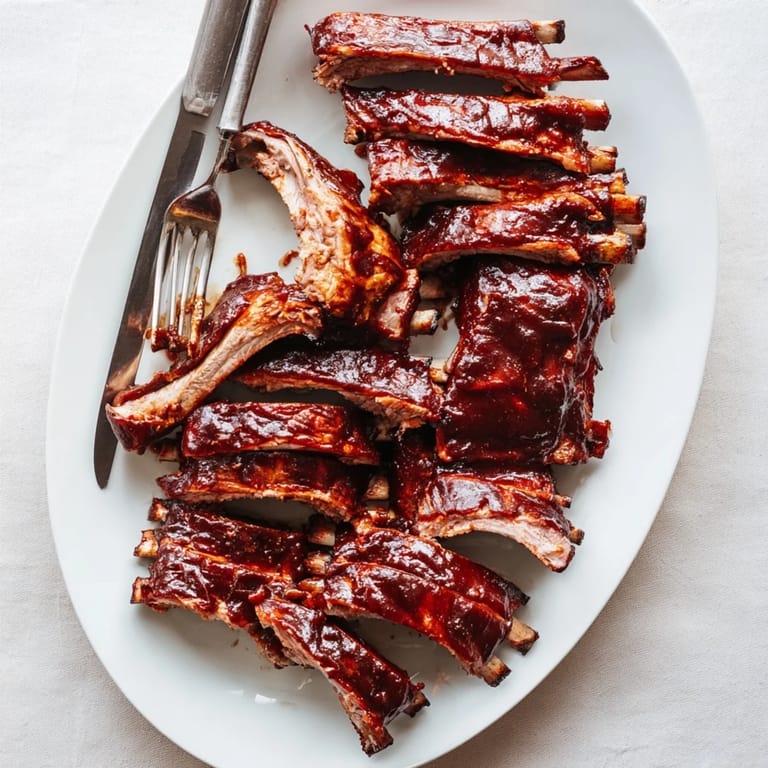
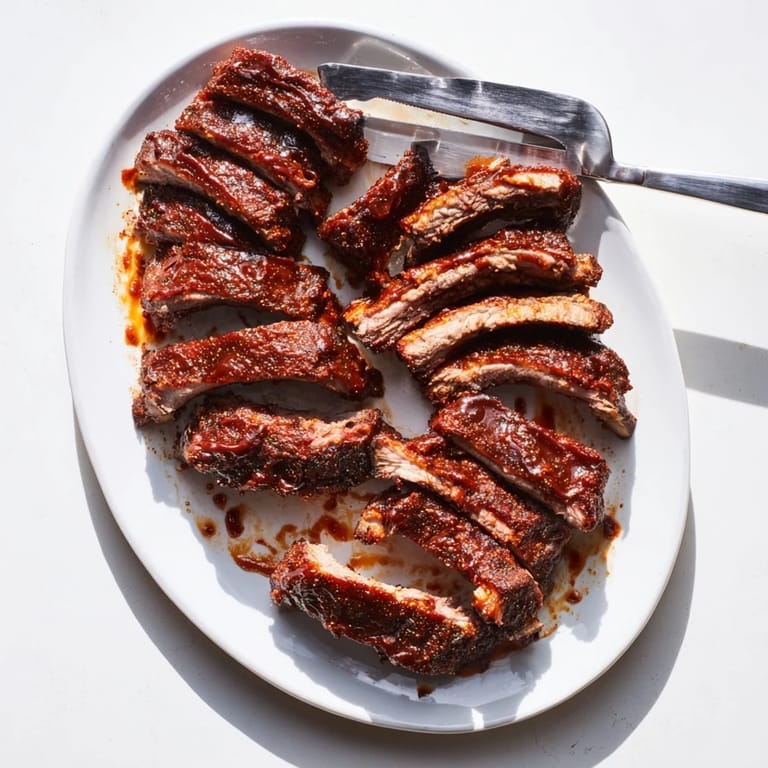
Last July, I made these for a small gathering of friends who were skeptical about ribs cooked in the oven. By the time I carried that platter to the table, covered in glistening sauce and falling apart at the mere suggestion of a knife, everyone went quiet. The only sounds were satisfied murmurs and the sticky music of fingers being licked clean.
Ingredients
- 1.5 to 2 kg pork or beef ribs: Choose meaty racks with good marbling, as fat equals flavor and tenderness during the long cooking time
- 2 tbsp olive oil: This helps the dry rub adhere and creates a seal that keeps moisture locked inside
- 2 tbsp brown sugar: Essential for caramelization and that subtle sweetness that balances the savory spices
- 1 tbsp smoked paprika: This is where the deep smoky flavor comes from, even without a smoker
- 1 tsp garlic powder and onion powder: These savory backbone spices build umami without burning like fresh garlic might
- 1 tsp ground black pepper and salt: The foundational seasoning that makes all other flavors pop
- ½ tsp cayenne pepper: Optional heat that lingers pleasantly, though you can adjust based on your crowd
- 1 cup barbecue sauce: Choose a sauce you love eating straight from the bottle, as the flavor intensifies during glazing
- 2 tbsp honey: Adds a gorgeous sheen and sticky finish that makes ribs look restaurant-worthy
- 1 tbsp apple cider vinegar: Cuts through the richness and adds brightness that prevents the sauce from being cloying
Tired of Takeout? 🥡
Get 10 meals you can make faster than delivery arrives. Seriously.
One email. No spam. Unsubscribe anytime.
Instructions
- Preheat and prepare:
- Set your oven to 150°C (300°F) and line a large baking sheet with foil, because cleanup will be much easier later
- Prep the ribs:
- Pull off that thin white membrane from the back side using a paper towel for grip, then pat the ribs completely dry
- Apply the oil and rub:
- Rub olive oil over all surfaces, then press the spice mixture firmly into the meat to ensure it sticks
- Wrap and slow cook:
- Place ribs meat side up, cover the pan tightly with foil, and let them cook undisturbed for 2 to 2½ hours
- Make the glaze:
- Whisk together the barbecue sauce, honey, and apple cider vinegar until smooth and combined
- Crank up the heat:
- Raise the oven temperature to 220°C (425°F) or fire up the grill to medium-high
- Glaze and caramelize:
- Brush a generous layer of sauce over the ribs and return them to the heat for 10 to 15 minutes, basting once more
- Rest and serve:
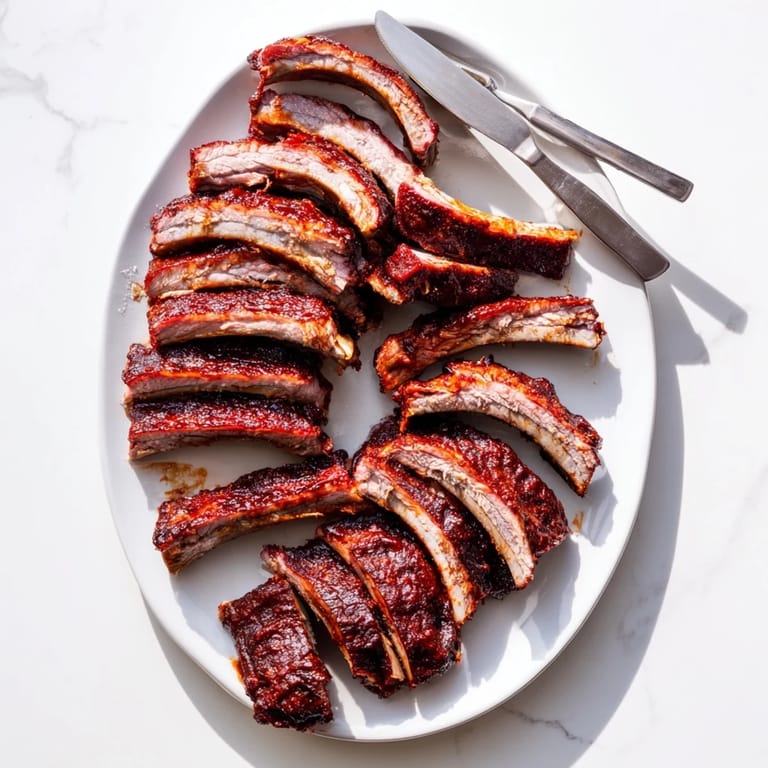
- Let the ribs rest for 5 minutes so the juices redistribute, then slice between the bones
 Pin it
 These ribs have become my go-to for celebrations because they feed a crowd and make people feel celebrated themselves. Something about eating ribs with your hands brings out a primitive joy in everyone. The table always gets quieter and happier simultaneously.
Choosing the Right Rack
Look for ribs with a nice meat layer on top and good marbling throughout. St. Louis-style ribs are trimmed neatly and cook evenly, while baby back ribs are leaner and cook faster. Beef ribs pack more flavor but need longer cooking time. Trust your butcher and do not be afraid to ask about the best racks they have.
The Foil Technique
Wrapping the ribs tightly during the initial cooking phase is what creates that fall-off-the-bone texture. The foil traps moisture and creates a braising environment. Some people add a splash of liquid like apple juice or beer inside the foil, but I find the ribs release enough moisture on their own. Just make sure that seal is tight.
Serving Suggestions
Creamy coleslaw cuts through the richness perfectly, and cornbread soaks up every bit of extra sauce. Baked beans, potato salad, or mac and cheese all feel right at home on the plate. Keep plenty of napkins within reach and consider serving wet wipes for sticky fingers.
- Warm the extra sauce before serving for easy dipping
- A sharp knife will help you cut cleanly between bones without shredding the meat
- Let guests add hot sauce at the table if they crave more heat
 Pin it
 There is something deeply satisfying about cooking ribs low and slow. Time and patience transform tough meat into something extraordinary. Good things come to those who wait.
Recipe Questions & Answers
- → How do I know when the ribs are done?
The ribs are ready when the meat pulls away from the bones easily and you can insert a fork with no resistance. The internal temperature should reach 145°F for safe consumption.
- → Can I make these ahead of time?
Absolutely. Cook the ribs completely, let them cool, and refrigerate. Reheat gently in a low oven or on the grill, brushing with fresh sauce before serving.
- → What's the purpose of removing the membrane?
Removing the thin silver membrane from the back of the ribs allows spices and smoke to penetrate the meat better, and it prevents a tough, chewy texture.
- → Can I use beef ribs instead?
Yes, beef ribs work wonderfully with this method. They may require slightly longer cooking time due to their larger size, but the same rub and glaze pair perfectly.
- → How can I make them spicier?
Increase the cayenne pepper in the dry rub or add hot sauce to your barbecue glaze. You can also use a spicy barbecue sauce base for extra heat.