 Pin it
 The first time I attempted gumbo, I spent forty minutes stirring that roux, my arm aching, convinced I'd ruined it when it turned the color of milk chocolate instead of the deep mahogany I'd seen in pictures. My neighbor, Miss Beverly, leaned over her fence when she smelled the aromatics hitting the hot oil and told me patience isn't just about the stirring—it's about trusting your nose to know when that flour has cooked just enough to deepen without burning. That pot taught me more about Louisiana cooking than any cookbook ever has.
I made this for my father's birthday last winter, watching him hover around the stove the same way I'd hovered over Miss Beverly's fence years ago. When he finally sat down with that first bowl, he closed his eyes for a full ten seconds before taking another bite, which is the highest compliment I've ever received across any table.
Ingredients
- Andouille sausage: The smoky foundation that makes this distinctly Louisiana, so don't substitute with something mild
- Boneless chicken thighs: Stay tender through the long simmer and absorb all those layered flavors
- Shrimp: Add them only at the end so they stay sweet and don't turn rubbery
- The holy trinity: Onion, bell pepper, and celery—this aromatic base is nonnegotiable
- Vegetable oil and flour: The magic ratio that becomes your roux, the soul of the entire dish
- Chicken or seafood stock: Use what you have, but make sure it's good quality since it carries the seasoning
- Smoked paprika and cayenne: These build the heat gradually without overwhelming the other flavors
- Worcestershire sauce: Adds that subtle umami depth that makes people ask what's in it
Tired of Takeout? 🥡
Get 10 meals you can make faster than delivery arrives. Seriously.
One email. No spam. Unsubscribe anytime.
Instructions
- Mise en place saves your roux:
- Have everything chopped and measured before you turn on the stove, because once that flour hits the oil, you're committed to stirring
- Make the roux:
- Heat oil in a heavy pot over medium heat, whisk in flour gradually, and stir constantly for 15 to 20 minutes until it turns deep chocolate brown
- Add the holy trinity:
- Toss in onion, bell pepper, and celery, stirring frequently for about 5 minutes until they soften and the roux is glossy
- Bloom the garlic:
- Stir in minced garlic for just 1 minute until fragrant, being careful not to burn it in the hot roux
- Brown the proteins:
- Add sausage and chicken, sautéing for 5 minutes until lightly browned and starting to render some fat
- Build the flavor base:
- Stir in tomatoes, bay leaves, thyme, paprika, cayenne, salt, and black pepper until everything is coated
- Add the liquid:
- Gradually pour in stock while stirring to prevent lumps, bring to a boil, then reduce to low
- Simmer and develop:
- Cook uncovered for 45 minutes, stirring occasionally, until the gumbo thickens nicely and flavors meld
- Add the shrimp:
- Stir in shrimp during the last 10 minutes of cooking, just until pink and opaque
- Finish and season:
- Stir in Worcestershire, hot sauce, adjust salt, and remove from heat before stirring in filé powder if using
- Serve it right:
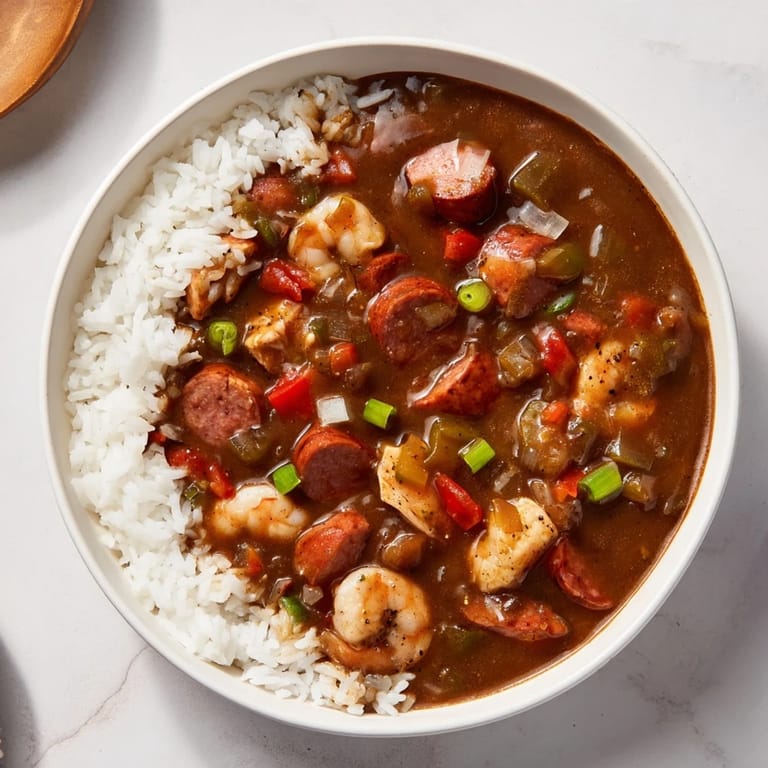
- Ladle hot over fluffy rice and garnish with scallions and parsley for that pop of freshness
 Pin it
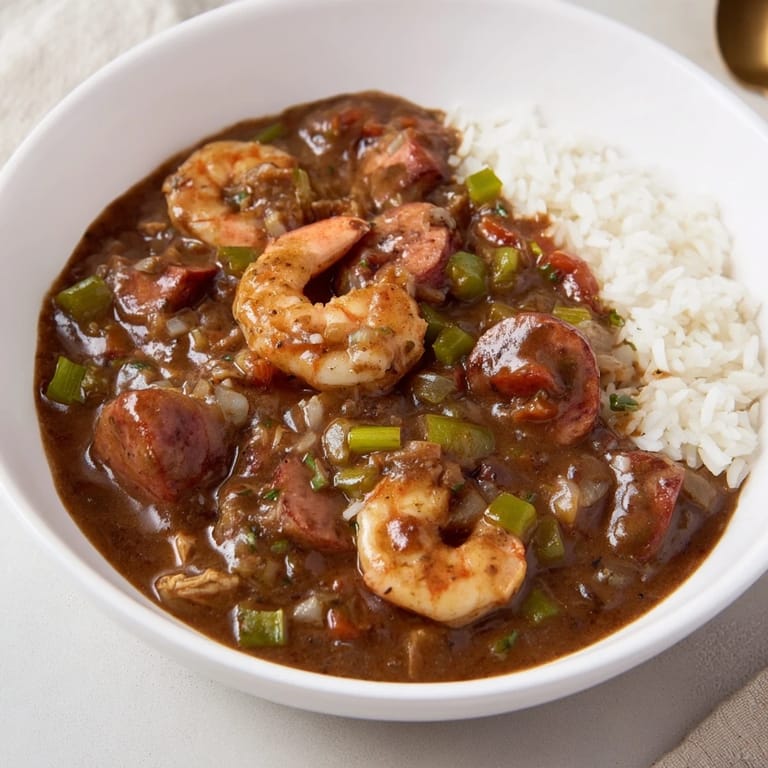
 This is the kind of recipe that turns an ordinary Tuesday into something people remember, the kind of cooking that makes your kitchen feel like the heart of the home. I've learned that gumbo isn't just about following steps—it's about showing up, paying attention, and feeding people something that took real care to make.
The Roux Is Everything
The difference between a decent gumbo and an extraordinary one comes down to how far you're willing to take that flour and oil. I've found that medium-low heat and genuine patience produce a roux with complexity you can't rush, developing nutty, almost chocolate notes that become the backbone of the entire dish.
Seafood Variations
Some of the best bowls I've ever made were seafood-only, using crab meat and oysters instead of chicken and sausage. The trick is adding delicate seafood at the very end so it stays sweet and tender, letting that long simmer build depth through the aromatics and broth instead.
Make It Yours
Every cook eventually develops their own gumbo fingerprint, whether that's more cayenne for heat or a heavier hand with the Worcestershire. The recipe will work with you as long as you respect the roux and don't rush the simmer.
- Leftovers keep beautifully and actually improve overnight
- Have hot sauce available at the table so people can adjust their own heat level
- Good crusty bread helps sop up every last drop of that precious broth
 Pin it
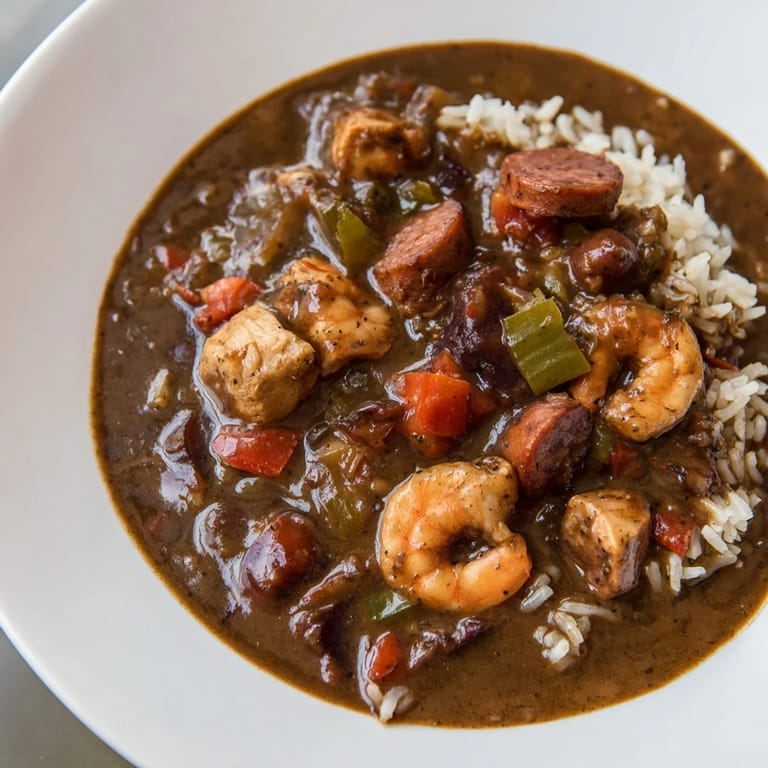
 There's something honest about a dish that demands you stand at the stove and pay attention, and gumbo rewards that attention more than almost anything else I know how to cook.
Recipe Questions & Answers
- → What makes a dark roux different from a light one?
A dark roux is cooked longer until it reaches a deep chocolate brown color, which takes 15-20 minutes of constant stirring. This develops a nuttier, more complex flavor that's essential for authentic gumbo, though it has slightly less thickening power than lighter roux.
- → Can I make gumbo without seafood?
Absolutely. You can create a delicious meat-only gumbo using chicken and andouille sausage, or make it vegetarian with okra and extra vegetables. Just adjust the stock accordingly—use vegetable broth for a completely meatless version.
- → What is filé powder and when should I add it?
Filé powder is made from dried sassafras leaves and is a traditional gumbo thickener and flavor enhancer. Add it at the very end after removing from heat, as cooking it can make the texture stringy. It's optional but adds authentic Creole flavor.
- → How do I store and reheat leftover gumbo?
Store cooled gumbo in an airtight container in the refrigerator for up to 3 days, or freeze for up to 3 months. Reheat gently over low heat, adding a splash of water or stock if needed. The flavors often deepen and improve after a day or two.
- → Why is the holy trinity important in gumbo?
The combination of onion, bell pepper, and celery—called the holy trinity in Cajun and Creole cooking—provides the aromatic base that flavors the entire dish. These vegetables are sautéed in the roux to build depth before adding proteins and stock.